
The Supreme Court has stayed the execution of an alleged Indian Mujahideen operative sentenced to death in connection with the 2013 Dilsukhnagar blasts.

Top Indian Mujahideen operative Tehsin Akhtar alias Monu, one of the alleged masterminds of a string of terror attacks in India, was on Wednesday remanded to police custody till April 2 by a Delhi court.

A tug of war was witnessed in a Delhi court between the National Investigation Agency and the Special Cell of Delhi Police for seeking the custody of top Indian Mujahideen operatives Tehseen Akhtar and Zia-ur-Rehman alias Waqas.

The Telangana High Court upheld a trial court's verdict handing out death penalty to five senior operatives of banned terror outfit, Indian Mujahideen, involved in a bomb blast that left 18 people killed in 2013. The court dismissed the criminal revision appeal filed by the IM operatives while upholding the NIA court's judgment. The five members, including IM co-founder Mohd Ahmed Sidibapa alias Yasin Bhatkal, Pakistani national Zia-ur-Rahman alias Waqas, Asadullah Akhtar alias Haddi, Tahaseen Akhtar alias Monu and Ajaz Shaikh, were convicted in 2016. The special court for NIA cases here awarded capital punishment to five convicts treating it as a rarest of the rare case. The high court, after conducting a detailed hearing in the appeals filed by the convicts, confirmed the death sentence of the five IM operatives.

Two suspected terrorists, wanted by the Delhi police in connection with their alleged involvement with the Batla House case, were understood to have found a safe haven in Uttar Pradesh.

A startling disclosure by arrested Indian Mujahideen co-founder Yasin Bhatkal -- that his outfit carried out a reconnaissance of nearly a dozen spots in Mumbai in August -- has prompted Maharashtra police to beef up security.
Rediff.com's Vicky Nanjappa enumerates the 5 deadly modules created by the Indian Mujahideen and what their strengths and goals are
According to sources in the National Investigation Agency, four persons planned and executed the twin blasts in Hyderabad on February 21, which claimed 16 lives. Vicky Nanjappa reports.

Pronouncing the sentence, Judge T Srinivasa Rao described the case as the "rarest of the rare".
Besides Bhatkal, the others convicted were Asadullah Akthar of Uttar Pradesh, Zia-ur-Rahman alias Waqas of Pakistan, Tahseen Akhthar of Bihar and Aizaz Shaik of Maharashtra. All of them are in judicial custody.

Indian Mujahideen had plotted to target cash-rich IPL and one of its operatives had surveyed the Wankhede Stadium here from inside during a T20 match in 2011 but the plan was aborted owing to tight security, a Maharashtra Anti-Terror Squad officer said on Tuesday.

Asadullah Akhtar alias Tabrez, one of the prime suspects in the Hyderabad twin bomb blasts, was brought to the city on Thursday amid tight security.

The National Investigation Agency team that brought Indian Mujahideen co-founder Yasin Bhatkal to Bihar's Darbhanga district, raided at least half a dozen places to nab other terror suspects on the basis of information provided by him, on Saturday.

Investigators questioning Indian Mujahideen co-founder Yasin Bhatkal have found a laptop and mobile phone from his possession which are expected to throw up vital clues in unraveling a number of terror modules.
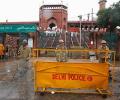
Indian Mujahideen terrorist Ejaz Sheikh, wanted in several cases including a terror strike in Jama Masjid in New Delhi, was arrested on Friday night from Saharanpur area of western Uttar Pradesh by the Special Cell of Delhi Police.

National Investigation Agency brought Dilsukhnagar bomb blast suspect and Indian Mujahideen co-founder Yasin Bhatkal to Hyderabad on a transit warrant on Sunday.

A Delhi court on Tuesday extended till September 22 the National Investigation Agency custody of Indian Mujahideen co-founder Yasin Bhatkal after the probe agency said he was involved in "subversive activities" of causing bomb blasts in different parts of India since 2003.

A Delhi court on Tuesday extended till September 17 the National Investigation Agency custody of Indian Mujahideen co-founder Yasin Bhatkal and his close associate Asadullah Akhtar after the agency claimed they were involved in a deep rooted conspiracy and had executed various blasts in India.
Indian Mujahideen co-founder Yasin Bhatkal and his aide Asadullah Akhtar were chargesheeted by the Delhi police in a court on Thursday in connection with the September 2010 Jama Masjid terror attack case where a bomb fitted in a car had exploded.


A court in Hyderabad has remanded Indian Mujahideen cofounder Yasin Bhatkal to judicial remand till October 17 in connection with the twin bomb blasts in Dilsukhnagar area in Hyderabad.

The National Investigation Agency on Wednesday filed its charge sheet in a Delhi court against five suspected operatives of terror outfit Indian Mujahideen for their alleged involvement in hatching a conspiracy to carry out terror strikes in the country.
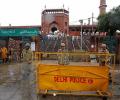
Foreigners wearing mini skirts and entering Jama Masjid prompted Indian Mujahideen co-founder Yasin Bhaktal and his aides to commit a terror strike at the historic mosque in September 2010, the Delhi police told a court.

Indian Mujahideen co-founder Yasin Bhatkal and close aide Asadullah Akhtar were on Friday remanded in police custody for 10 days by a Delhi court in connection with a case lodged against them for the September 2010 Jama Masjid terror attack days before the Commonwealth games.

magistrate that he had assembled the explosives and had "guided" the members of the terror outfit while planting bombs at Hyderabad's Dilsukhnagar area in February last year.

Indian Mujahideen co-founder Riyaz Bhatkal not only used to send funds for terror acts across the country but also regularly provided money to families of the jailed and absconding operatives of the banned outfit, the NIA has told a special court in New Delhi.

Indian Mujahideen co-founder Yasin Bhatkal's aide Fasih Mahmood, deported from Saudi Arabia in 2012 for his alleged involvement in terror acts, has been allegedly assaulted by a jail inmate inside the high security Tihar jail.

Arrested terrorist Yasin Bhatkal is reported to have told his interrogators he was living in Nepal for the past six months and had readied around 100 hardcore associates who could do anything at his bidding.

Indian Mujahideen co-founder Yasin Bhatkal and his aide Asadullah Akhtar were on Monday refused bail in connection with a September 2008 Delhi serial blasts case by a court in New Delhi which allowed the plea of police seeking 15 days time to complete its probe against them.
The Delhi police has filed its charge sheet in a local court against Indian Mujahideen (co-founder Yasin Bhatkal and his associate Asadullah Akhtar for allegedly setting up an illegal arms factory in New Delhi from where huge quantity of arms and ammunition were recovered.
Indian Mujahideen co-founder Yasin Bhatkal and his close associate Asadullah Akhtar were on Friday remanded to 12-day police custody by a Delhi court after the National Investigation Agency said their custodial interrogation was required to unearth larger conspiracy of terror attacks.

The Indian Mujahideen follows the same pattern as its creator, Lashkar-e-Tayiba.
Indian Mujahideen co-founder Yasin Bhatkal and his close aide were sent to custody of the Delhi police for 15 days after a court allowed the plea of the probe agency to arrest them in a case lodged in 2011 for allegedly setting up an illegal arms factory.
Indian Mujahideen co-founder Yasin Bhatkal was on Saturday arrested by the National Investigation Agency Hyderabad in connection with the February 2013 Dilsukhnagar blast case after a Delhi court allowed its plea and granted the probe agency his two-day remand.

National Investigation Agency on Friday told a special court that suspected Indian Mujahideen terrorists Tehsin Akhtar and Zia-Ur-Rahman are "still conspiring" to carry out terror strikes at various prominent places in India, especially the national capital, with the aid of Pakistan-based handlers.

Telangana prison officials denied reports that the jailed operative had called his wife using a mobile phone.

Believe it or not, but terror outfit Indian Mujahideen sent the operatives who successfully carried out the July 2011 blasts in Mumbai on a vacation to Goa!

Indian Mujahideen co-founder Yasin Bhatkal sought the help of Nepal-based Maoists for procuring arms and ammunition but it did not fructify as they quoted very high rates, the National Investigation Agency has said in its charge sheet filed in a Delhi court.

Proceedings related to terror masterminds Yasin Bhatkal and Abdul Karim Tunda in 2013 hogged the limelight in Delhi courts, which brought down the curtains in the Batla House encounter case by giving life term to a suspected terrorist of the Indian Mujahideen module.

Interference from politicians in terror cases creates added confusion, giving operatives enough time to give investigators the slip. Vicky Nanjappa reports
